

- Armour thyroid works well for some patients but others remain symptomatic because they need additional T3 hormone beyond what armour provides.
- If you're on thyroid replacement but still have fatigue, weight gain, or brain fog, low free T3 levels might be the problem rather than undertreatment with T4.
- Your body requires proper conversion from T4 to T3, which depends on selenium, zinc, iron, and other nutrients. A deficiency in these nutrients blocks conversion.
- Symptoms persist in some thyroid patients because they're being treated to a normal TSH number rather than to actual symptom relief and proper T3 levels.
- Work with a provider willing to measure free T3, free T4, and reverse T3 to determine your actual thyroid status instead of relying solely on TSH as a marker.
Will taking Armour thyroid help you lose weight, feel better, and have more energy?
That is the question that many patients have and one of the main reasons they want to at least give Armour thyroid a try.
Armour thyroid is a special thyroid medication that is formulated to include ALL of the thyroid hormones – both biologically active and biologically inactive forms.
These special properties may be one of the reasons that patients who switch to Armour thyroid experience significant improvement in their hypothyroid symptoms.
But will it work for you?
This guide will teach you everything you need to know about using Armour thyroid ranging from who should use it, how to use it safely, how to use it for weight loss, and common pitfalls patients experience.
Let’s jump in:
What to Know About Armour Thyroid
What is Armour thyroid?
Armour thyroid is a prescription medication that is used to treat patients with the diagnosis of hypothyroidism.
As you probably know hypothyroidism is a condition in the body that results in a decreased production or utilization of thyroid hormone in the body.
As a result patients with a “sluggish” thyroid often experience symptoms such as weight gain, fatigue, cold extremities, constipation, and so on.
These patients (those with hypothyroidism) also notoriously struggle with the ability to lose weight and keep it off.
So where does Armour thyroid fit in here?
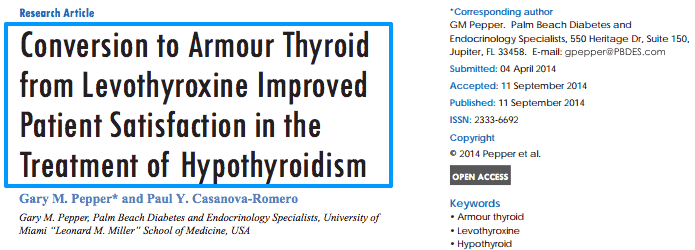
Armour thyroid is unique among thyroid medications in that it contains both active AND inactive thyroid hormones [1].
This is actually quite important because the active thyroid hormone T3 is what makes thyroid hormone do its job.
Armour thyroid is, therefore, a significantly more potent thyroid medication when compared to thyroid medications such as levothyroxine and Synthroid.
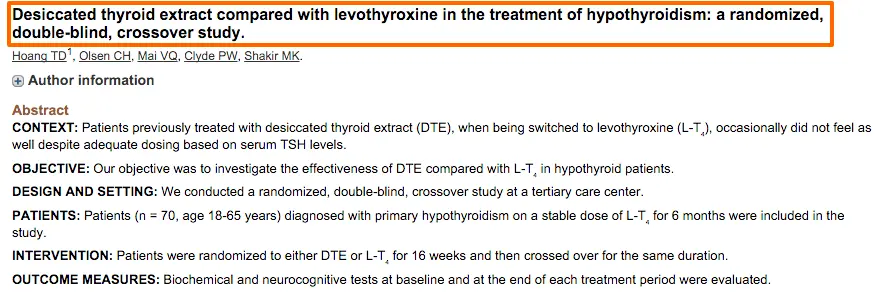
Patients can take advantage of this increased potency and may actually feel much better when switching from other medications to Armour thyroid.
The question is why?
Armour Thyroid vs. Levothyroxine and Synthroid
I mentioned that Armour thyroid is unique among thyroid medications so let me explain a little bit further here.
Armour thyroid is ranked among a class of thyroid medications known as Natural Desiccated thyroid medications.
These medications are created by desiccating (or crushing) up the thyroid glands of certain animals – in this case, pigs.
Pharmaceutical companies then encapsulate the desiccated pig thyroid gland and standardize the hormones in each capsule and humans then take it.
I know it sounds weird but it works incredibly well for several reasons:
1. Armour Contains Both T3 and T4
When your thyroid is functioning at 100% it naturally produces 2 thyroid hormones each and every day.
Normally you wouldn’t think twice about this, but it matters when you take thyroid medication.
Why?
Because the conventional treatment for patients with hypothyroidism is to supplement with only the inactive thyroid hormone T4.
Physicians, such as endocrinologists, give patients T4 only thyroid medications because they assume that each patient [2] will be able to perfectly convert the inactive thyroid hormone T4 into the active thyroid hormone T3.
This may work for many patients but it absolutely does not work for everyone!
In fact, it has been estimated that at least up to 15% of patients may have trouble tolerating T4-only medications [3] and they manifest this “trouble” with low serum T3 levels despite a “normal” TSH.
Let’s recap this information because it can be confusing:
The healthy thyroid gland naturally produces about 80% T4 thyroid hormone and about 20% T3 thyroid hormone [4] each and every day.
Your body lives in harmony and functions optimally when it can create the amount of T4 and T3 that it needs on a daily basis.
Your body has created a special mechanism to “control” the amount of thyroid hormone that it needs on a daily basis through a system known as thyroid hormone conversion.
In this system, your body takes the inactive thyroid hormone T4 and it can activate it by turning it into T3.
It can also “inactive” it if it doesn’t need any extra thyroid hormone by turning it into reverse T3.
This is just thyroid physiology 101 [5].
Armour thyroid is special when compared to levothyroxine because it contains at least two types of thyroid hormone: T4 and T3.
Levothyroxine, on the other hand, only contains T4.
This means Armour thyroid may more closely approximate what your body produces in a natural and healthy state.
I made this point #1 because I think it is probably the most important feature which separates Armour from levothyroxine but it certainly isn’t the only one:
2. Other Thyroid Hormones in Armour Thyroid
Another very important beneficial aspect of taking Armour thyroid is that you are getting more than just the combination of T3 and T4 thyroid hormones.
In physiology, we give all of the credit to T3 because it is the most biological thyroid compound floating around in your blood.
But did you know that there are other thyroid hormones?
These other thyroid hormones, known as T1 and T2, also exist in your body but they don’t get much credit because they are considered to be “less biologically active” than T4 and T3.
But emerging research [6] is showing that these compounds are still important nonetheless, even if we don’t completely understand what they do or how they work.
It would be silly of us to assume that simply because we don’t know what they do or how they work that they are unimportant, but that is kind of the mentality that we have when it comes to the human body.
No matter how you look at it though there may be some individuals who benefit from the “extra” thyroid hormones T1 and T2 that come with the whole Armour thyroid package.
These hormones (along with probably other enzymes and hormone precursors) are present in the thyroid gland of animals and therefore make it into the pharmaceutical medication as it is prepared.
These extra hormones may not be of benefit to each and every person but it is certainly possible that patients who don’t have a functioning thyroid (such as those who have had it surgically removed) may benefit from the extra T1 and T2 that comes in this medication.
Patients who still have a thyroid gland that functions may be able to produce T1 and T2 in sufficient amounts to not notice a difference, but either way it’s worth discussing.
3. Armour Provides T3 Without T4 Conversion
I mentioned previously that Armour thyroid is more “potent” and more “active” than T4 medications such as Levothyroxine and Synthroid and part of this is because it contains the active T3 hormone but another important part is that it doesn’t require as much activation.
Activation or conversion are both words for the same process:
The turning of inactive T4 into active T3.
This process is controlled by various factors including your genetics so it may come as no surprise that some people are “better” at converting thyroid hormone than others.
New research has shown [7] that there are some existing genes known as SNPs that may alter the efficiency of this conversion process.
This means that some of you out there are just not very good at converting T4 into T3 [8] while some of you out there are incredible at doing it.
So how does this relate to Armour thyroid?
Because Armour thyroid contains T3 it can directly bypass this conversion process which allows the body to use some of the thyroid hormones immediately after ingestion.
If we could reliably test for these genetic differences we would be able to more easily determine what kind of thyroid medication that each person needs.
Since this testing is not mainstream (yet!) it may be beneficial for certain individuals to use Armour thyroid over traditional T4 medications like Synthroid.
Is Armour Better Than Levothyroxine or Synthroid?
When you lay out the benefits of Armour thyroid and compare it to T4-only medications it’s easy to come to the conclusion that Armour thyroid may be superior, but is this really true?
I wouldn’t jump to that conclusion right away, but there are certainly some reasons that you should consider using Armour thyroid.
Reasons to try or consider using Armour thyroid:
- You’ve tried Synthroid and Levothyroxine and you still experience hypothyroid symptoms even with a “normal” TSH.
- You have low reverse T3 levels or low serum T3 levels with a “normal” TSH.
- You are gaining weight or remaining weight neutral on T4-only medications even with normal labs and after trying dietary changes and adding in exercise.
- You are suffering from infertility or menstrual problems despite taking thyroid medication.
This is not a complete list but instead focuses on our current understanding of thyroid physiology, genetics, and thyroid conversion and attempts to come up with logical reasons why some patients might feel better on Armour thyroid compared to other medications.
While many patients report almost immediate improvement in their hypothyroid symptoms when switching to Armour thyroid there are plenty of patients who also report negative symptoms (more on that below).
And these patients may simply do better on traditional T4 medications.
Reasons to use or stick with Levothyroxine/Synthroid:
- T4 medications may be better for people who experience heart palpitations, anxiety, or other symptoms when taking Armour thyroid or NDT.
- T4 medications have many different tablets and variations which means that you can adjust dosing easily.
- Patients may benefit from taking the combination of T4 and T3 in individual doses and medications to titrate specifically to the needs of the patient.
- Some patients have no issues with peripheral thyroid conversion and they readily and actively convert T4 to T3 when it is supplied.
Instead of focusing on which is the “best” thyroid medication, it’s more helpful to determine (through testing and symptom management) which is the best thyroid medication for YOUR body.
This approach will help you achieve long-lasting results and help improve your symptoms more than any other.
Can Armour Thyroid Help With Weight Loss?
One of the biggest (and perhaps more important) questions that most patients have when considering Armour thyroid is this:
Will Armour thyroid actually help me lose weight?
Most people assume when they switch to Armour thyroid that their extra weight will magically start shedding off…
And about 90% of people who make the switch don’t see those results.
Why does this happen?
While Armour Thyroid is a great medication (that will probably help reduce your symptoms even if it doesn’t help you lose weight) it usually isn’t enough for weight loss by itself.
After all – If weight loss were that simple, then Doctors would be prescribing low doses of Armour to every patient!
Why this happens is a long story but the short version is that your thyroid is probably only contributing to about 10-20 pounds of extra weight you may be carrying right now.

If you have more than that to lose there is a good chance your extra weight is from something else entirely.
Another hormone imbalance…
Poor diet…
Too much stress…
Lack of sleep…
Menopause…
Environmental exposure…
You get the idea.
While your thyroid certainly contributes (at least initially) to weight gain, it almost always isn’t the ONLY contributing factor.
I’ve discussed the thyroid hormone obesity myth in detail and you can read more about this unique approach to weight loss in thyroid patients here.
So let’s talk about the 5 main reasons that patients who make the switch to Armour Thyroid don’t lose weight and what you can do to FINALLY lose those extra pounds:
#1. Insufficient Dosing
One of the biggest issues is that many patients may be undertreated or underdosed.
If a patient is hypothyroid, meaning their thyroid gland is not producing enough thyroid hormone naturally, then they must undergo thyroid hormone replacement therapy.
In order for this therapy to be effective, you must be getting ENOUGH thyroid hormone.
For various reasons, physicians may be relying on tests that may not accurately identify the status of thyroid hormone in the body.
You can read more about this idea in detail here.
Relevant to this article it’s important to understand that dosing based on the TSH alone may not be the most accurate way to manage Armour thyroid dosing.
Another reason that physicians may not be adequately dosing certain patients is that they are unfamiliar with dosing thyroid medications that contain T3.
As we’ve discussed previously, Armour thyroid contains a combination of T4 (the inactive thyroid hormone) and T3 (the active thyroid hormone).
The portion of T3 thyroid hormone in each “grain” (which is a unit of Armour thyroid dosing) is actually still quite small:
1 grain = 38mcg of T4 and 9mcg of T3
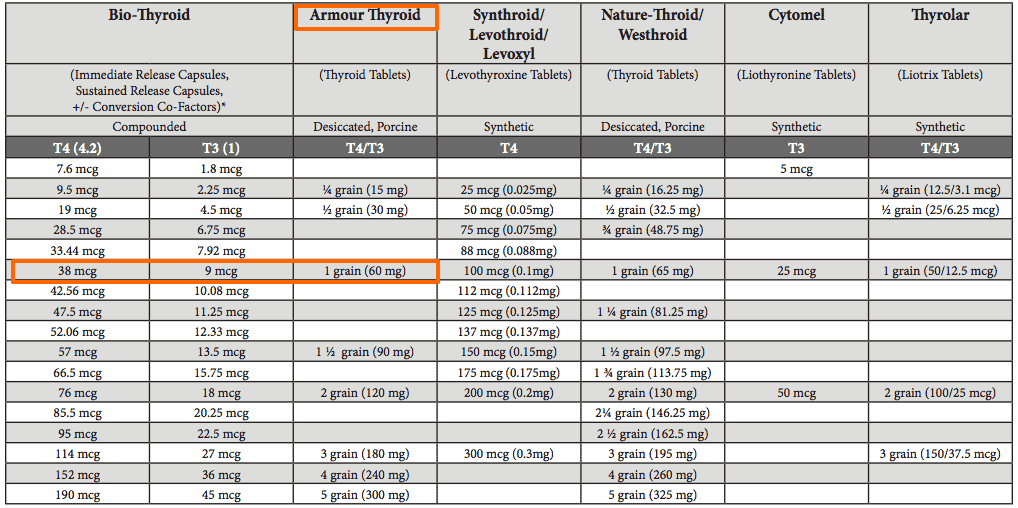
Doctors know that T3 it is approximately 3.3 times more effective at dropping the TSH than T4 medication alone [9] (Synthroid and levothyroxine).
This means that when transitioning from T4-only medication to Armour thyroid many patients are usually under-treated, especially if physicians rely solely on the TSH as an indicator of thyroid status in the body.
Other factors such as your sex hormone binding globulin may be a better indicator of tissue levels of thyroid hormone.
It’s also important to note that many providers aren’t as comfortable dosing Armour Thyroid as they are levothyroxine and so they will intentionally underdose patients because they are concerned about side effects.
Switching From T4-Only Medication to Armour Thyroid
If you transitioned from Levothyroxine (T4-only medication) then you should know how to properly convert your medication.
Most conversion charts will show that 100mcg of T4 = 1 grain of Armour thyroid.
But remember that each grain of Armour thyroid only has 38mcg of T4 and 9 mcg of T3.
Even if you assume that T3 is 3x more potent (which isn’t the best indicator of biological activity in the body) then you still come up short with this conversion – let’s break down the math:
38 mcg of T4 = 38mcg of T4
9 mcg of T3 x 3 = 27 mcg of T4 “equivalents” in each grain of Armour thyroid
38mcg + 27mcg = 65 mcg of T4 “equivalents” in each grain of Armour thyroid total
So suggesting that 1 grain of T4 (which equals about 65mcg) is a substitute for 100mcg of T4 is not necessarily a fair assumption.
Using this conversion you can see how many people may end up under-treated.
It may be no wonder why some patients who “transition” to Armour thyroid often feel symptomatically worse during the transition.
This is sometimes used by the physician as “proof” that Armour thyroid doesn’t work.
I’ve even had patients who report that when they switch to Armour thyroid their TSH increases and the physician then states that Armour thyroid is unreliable.
In reality, it may be more accurate that the patient was underdosed which resulted in a hypothyroid state and a subsequent increase in the TSH.
This change is not necessarily indicative of the failure of Armour thyroid but more of a failure with the conversion and dosing process.
A more accurate conversion process may look something like this:
- 50 mcg of T4 = About 1 grain of Armour
- 100mcg of T4 = About 2 grains of Armour
- 150mcg of T4 = About 3 grains of Armour
A couple of important points when considering this information:
First:
If you are transitioning from a T4-only medication do NOT start yourself off at the maximum dose of Armour.
If you dose your Armour too quickly you are likely to end up with side effects from the T3: Heart palpitations, Anxiety, Heat intolerance, etc.
Instead, start off on a lower dose and titrate up SLOWLY every 10-14 days.
Second:
Thyroid dosing is highly individualized and depends on factors such as your current metabolic rate, your sensitivity to T3, and your peripheral thyroid conversion status.
This means that you can never use a “dosing calculator” to simply determine what your dose should be, instead you may need to use a combination of trial and error along with frequent laboratory testing.
2. The T3-to-T4 Ratio in Your Medication
While Armour does contain some T3 it is possible that your body may actually need more.
Along this same vein, it’s also possible that your dose of T4 may be either too high or too low relative to your dose of T3.
If this sounds confusing, don’t let it be:
Armour thyroid (and other forms of Natural Desiccated thyroid) contain fixed ratios of T4 to T3.
Meaning the amount of T3 in each grain of Armour is always the same (this is a good thing from a pharmaceutical and consistency standpoint, but may be a problem due to the inability to titrate individual T3 and T4 doses).
Unfortunately, some people may require higher amounts of T3 due to reasons such tissue level hypothyroidism[17], euthyroid sick syndrome/low T3 syndrome [10], or peripheral thyroid conversion disorders.
These conditions are characterized by physiologic changes in which the patient may require higher doses of T3 to saturate cellular receptors and allow thyroid hormone to get into the cells.
How do you know if you are someone who needs more T3?
Patients who need more T3 usually fall into one or more of the following categories:
- They have high levels of Reverse T3
- They have Leptin Resistance
- They have Diabetes, Prediabetes, or Insulin Resistance
- They have extremely low body temperatures
- They have a personal history of bipolar disorder or a strong family history of mental health disorders
- They have a personal history of Fibromyalgia or Chronic fatigue syndrome
If you fall into any of the categories above AND you aren’t losing weight on Armour thyroid then you may want to consider adjusting the individual dosing of T3 and T4 in your medication.
In some cases, this may be as easy as adding a small dose of T3, in others, it may mean switching to individual T4 and T3 prescriptions.
Adding T3 to Armour Thyroid
One problem with Armour thyroid (and NDT in general) is the static dosing in each individual grain of hormone.
Each grain gives you 38mcg of T4 and 9mcg of T3.
This is ok for some patients but doesn’t allow for altering individual dosing of the T4 and T3 if necessary.
Patients with high stress, high levels of inflammation, leptin resistance, insulin resistance, etc. may require more T3 relative to T4.
Some studies even suggest [11] that temporary supraphysiologic dosing of T3 may help to overcome these hormone imbalances, provided it is used safely and correctly.
In my experience, (and if used safely) lowering T4 dosing and increasing T3 dosing provides improved weight loss and improved lipid metabolism in a subset of patients.
This is also confirmed by studies [12] which have shown that the transition from T4 to T3 dosing (based on pituitary and TSH testing) improves all of these markers.

In some patients dropping Armour thyroid total dosing and adding T3 can be sufficient to improve symptoms and provide improved weight loss without causing negative symptoms.
T3 can be added to Armour thyroid with the following medications: liothyronine, Cytomel, or SR T3.
3. Other Hormone Imbalances, Including Leptin Resistance
If you aren’t familiar with Leptin resistance or the hormone leptin please read this article.
As a quick primer:
Leptin is a hormone that is pumped out by your fat cells (yes they pump out hormones!).
As fat cells grow, leptin levels increase. As they increase they are supposed to tell your brain to increase metabolism and start burning off that extra fat you just gained.
When you have leptin resistance [13] the exact opposite happens: your body thinks you’re starving so it decreases metabolism and increases appetite (even though you have plenty of fat).
The presence of leptin resistance creates hormonal havoc which results in weight loss resistance despite changes to your diet and to the amount that you exercise.
You simply won’t lose weight until it is treated.
And, to make matters worse – high levels of leptin actually decrease T4 to T3 conversion [14] in the body.
How do you know if you have Leptin resistance?
Leptin levels can be tested easily in the serum and fasting leptin levels higher than 10-12 indicate the presence of leptin resistance.
Patients with leptin resistance generally require higher levels of T3-only medications to help reduce the T4 to reverse T3 conversion that occurs with this condition.
It’s important to note that leptin resistance is generally a late finding and usually indicates that heavy metabolic damage has already occurred.
Leptin resistance is often accompanied by insulin resistance and thyroid resistance (all three conditions are caused by the same thing).
Patients with leptin resistance generally require aggressive treatment to reverse leptin levels to help with weight loss.
To see a case study example treatment plan please refer to this post.
You can find supplements to treat leptin resistance here.
I’ve outlined how to treat leptin resistance in this article.
4. Reactions to Inactive Ingredients
Not all forms of Natural Desiccated thyroid are created equal.
Beyond Armour thyroid, there are other types of natural desiccated thyroid such as Nature-throid and WP Thyroid.
While it’s true that 1 grain of Armour thyroid contains the same amount of active thyroid hormone (T3 and T4) as a grain of WP thyroid or Naturethroid – these medications differ in the inactive ingredients that they contain.
And it is these inactive ingredients that may cause certain people to respond well (or not) to these medications due to how they react to these inactive ingredients.
In addition, these inactive ingredients may alter breakdown and digestion which then alters the absorption of thyroid hormone in the body.
Some individuals who take NDT (and Armour thyroid) may experience negative side effects while taking this medication which they may wrongly attribute to the active thyroid hormone.
Instead, it may be possible that they would do much better by switching to a different formulation rather than switching back to T4 medication.
Using the table below you can see that the NDT form of thyroid hormone with the least amount of ingredients is WP thyroid – though this doesn’t necessarily mean that it is the “best”.
These changes in inactive ingredients help to explain why some patients react poorly to Armour thyroid with symptoms like headaches, worsening fatigue, or rashes – only to find that these symptoms completely resolve upon switching to Naturethroid.
Again it’s not the difference in the concentration of thyroid hormone in each individual medication but most likely a reflection of digestion and absorption.
As an example Armour thyroid is known to contain both methylcellulose and dextrose and these inactive ingredients are notoriously difficult for some patients to digest and break down.
You can think about methylcellulose as a glue that holds on tight to the thyroid hormone component of the medication and in order for your body to absorb (and properly utilize) your intestinal tract must separate the methylcellulose from the active thyroid hormone.
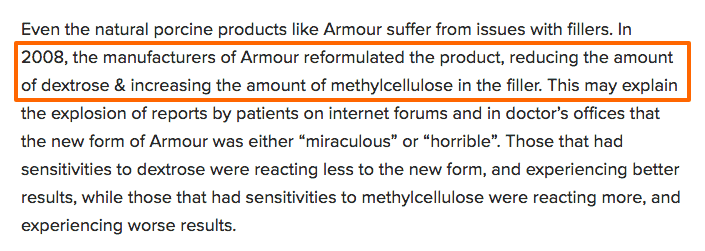
Unfortunately, many patients with hypothyroidism also have gastrointestinal issues including low stomach acid [15].
This may result in decreased absorption of thyroid hormone or cause a “delayed” release of the medication into the bloodstream.
This exact process is what happens when patients take Sustained release T3.
The “slow release” comes from the fact that it is harder to digest and absorb in the body, but this also reduces the overall amount of hormone available in each dosage.
In general patients with GI-related issues may do better on WP thyroid or Tirosint which both have fewer inactive ingredients and absorption tends to be better.
- Bottom line: If Armour thyroid isn’t helping you (either with weight loss or you still remain symptomatic) you might consider switching to a different form of NDT like Naturethroid or WP thyroid.
5. High Reverse T3 Levels
If you aren’t familiar with Reverse T3 please read this article.
To recap:
T4 = INACTIVE storage form of thyroid.
T3 = ACTIVE thyroid hormone.
Reverse T3 = INACTIVE thyroid metabolite that competes with T3 for cellular binding.
It should come as no surprise then to hear that you don’t want high levels of Reverse T3 because it competes for binding with T3 which creates tissue-level hypothyroidism or thyroid resistance.
In general, the higher your reverse T3 the more hypothyroid you will feel and the less active thyroid hormone is in your body (unless the Reverse T3 is compensatory due to supraphysiologic levels of free T3).
High levels of reverse T3 may lead you to experience weight gain, a slower-than-normal metabolism, and other hypothyroid symptoms.
Because T4 has the option to turn into T3 or Reverse T3 we need to concern ourselves with what causes the body to preferentially create more reverse T3.
It turns out that many conditions may be sabotaging your thyroid conversion and the presence of these conditions may be causing your body to turn T4 into reverse T3.
These conditions include:
- Taking thyroid medications containing T4 (Synthroid, levothyroxine but also NDT like Armour thyroid) – This acts as a substrate, and in the presence of inflammation or other hormone imbalances your body may produce Reverse T3 over T3
- Inflammation – From conditions like SIBO, Hashimoto’s, Food allergies, nutrient deficiencies, medications, etc.
- Leptin resistance
- Insulin resistance
- Obesity
- LPS – Usually caused by increased intestinal permeability (SIBO, SIFO, SIBO, leaky gut, etc.)
- Certain Medications: Anti-depressants, diabetic medications, antiseizure medications, blood pressure medications, Narcotics, etc. (Please don’t stop taking these medications if you are on them, but consider discussing options with your Doctor)
Two things should pop out to you after reading that list:
1) Thyroid medications containing T4 may contribute to elevated reverse T3 levels
And…
2) If you fall into one or more of the categories listed above AND you are taking T4 medication (including Armour thyroid, but especially T4-only medications like Synthroid or Levothyroxine) then your medication may be contributing to your inability to lose weight.
What happens when Reverse T3 levels are too high?
As Reverse T3 levels climb your cells will have more difficulty taking up active thyroid hormone.
This leads to a situation where you will have the symptoms of hypothyroidism but your lab tests may be “normal”.
Your temperature will drop, your metabolism will drop and your appetite will increase in an attempt to compensate.
All of these changes ultimately lead to weight gain.
The real question is what do you do about it?
How do you fix high Reverse T3 levels?
Because high levels of reverse T3 can be caused by different factors, the best way to treat it is to identify the cause and focus on that issue.
For instance:
If you have high levels of insulin – your focus should be on reversing this condition.
If your leptin is too high – then you should undergo therapies designed to reduce leptin resistance.
If your T4-containing medication is too high you may need to decrease your T4 dose and/or increase your T3 dose.
If you suffer from chronic inflammation then you may need to address whatever issue is causing inflammation in your body.
And so on.
If you can identify and treat these conditions then your body will naturally be able to convert T4 into T3 which is exactly what you want.
Armour Thyroid Dosage
If you decide that Armour thyroid is worth trying, then how do you dose it?
Dosing Armour thyroid is not much different than using traditional or conventional thyroid medications such as levothyroxine or Synthroid.
The primary difficulties come when transitioning from an existing thyroid medication over to Armour thyroid.
If you fall into this category then you need to make sure that you are “converting” your dose correctly as we outlined at the beginning of this post.
Many physicians will tend to underdose you on the transition because they aren’t familiar with using medications that contain T3.
This underdosing may have the unintended consequence of exacerbating (at least temporarily) hypothyroid symptoms.
If this happens to you don’t let it scare you from using the medication further!
Instead, make sure you re-evaluate your lab tests and determine if you are on a sufficient dose or if you need a higher dose.
Each person will require a unique amount of thyroid hormone but the average dose of Armour thyroid is somewhere between 2-3 grains or 180mg.
Armour thyroid can be dosed in milligrams or in grains and it’s important to understand the difference.
1 grain of Armour thyroid is equal to 60 mg.
60mg of Armour thyroid contains about 38mcg of T4 and 9 mcg of T3.
So 1 grain = 60mg = 38mcg of T4 and 9 mcg of T3.
If you are taking 2 grains of Armour thyroid then you are taking 120mg.
2 grains of Armour thyroid = 120 mg of Armour thyroid = 76 mcg of T4 and 18mcg of T3.
If you use the calculation above then 2 grains is equal to 120mg of Armour thyroid or 130mcg of T4 equivalents (if you convert the 18mcg of T3 into T4).
This is helpful because it can help you determine how much Armour thyroid to start with and what kind of dose you should be looking to hit.
As a general rule of thumb (though not always accurate) certain patients tend to need higher doses of thyroid hormone.
Patients in this category include those with higher metabolic demands (those with a higher metabolism), patients who are overweight or who have a higher than average BMI, and patients who may be taking medications that block or limit thyroid hormone action.
If you fall into any of these categories make sure you monitor your dose very closely.
If you are transitioning from an existing T4 medication then starting your dose off at about 25% of the maximum and then increasing slowly every few weeks is a safe and effective method.
If you are naive to thyroid medication (meaning that you have never tried thyroid medication before) then starting off at 15-30mg and titrating slowly up every few weeks may also be appropriate.
While none of these are hard and fast rules they can help you get started.
In addition to these general rules there are also other factors that you should consider when using armour:
Tips for Taking Armour Thyroid
#1. Take Armour thyroid on an empty stomach.
No doubt you’ve heard this one before!
Taking thyroid medication on an empty stomach is usually recommended by physicians and pharmacists because this action may help your body increase absorption.
Thyroid hormone can bind to certain substances which may reduce the dose of thyroid medication that is delivered to your body.
For instance:
If you are taking 1 grain of Armour thyroid but you take it with a meal, it’s possible you may only be absorbing 70% of that 1 grain.
Taking your medication on an empty stomach helps fight this.
#2. Take away from supplements that contain Calcium and Iron but pretty much avoid all supplements if possible.
Along the same vein as taking your medication on an empty stomach is to avoid taking your medication with other supplements – especially those that contain calcium or iron.
Calcium and iron are notorious for binding to and preventing the absorption of thyroid hormone, but this can also occur with other supplements.
To play it safe I generally recommend that you wait 4 hours after taking any supplement before you also take your thyroid medication.
#3. Splitting your dose.
Another strategy worth considering is to split your dose throughout the day.
Splitting your dose may help reduce the massive swings in thyroid hormone that occur when you take an entire day’s worth of thyroid hormone at once.
So if you are taking 2 grains total each day you might consider taking 1 grain in the morning and then another in the afternoon.
So your total dose stays the same but you are “splitting” that dose throughout the day.
This can help maintain constant serum levels of thyroid hormone and may be especially helpful for patients who are sensitive to T3.
#4. Consider taking it at night.
Another strategy that I often recommend is to simply take your thyroid medication at night.
Taking your medication at night offers several advantages:
First is that you don’t have to worry about taking it on an empty stomach because most people generally don’t eat right before bed.
And second is that taking your thyroid hormone in the evening may actually improve absorption because the GI tract tends to be slower in the evening [16].
Armour Thyroid Side Effects and Symptoms
Are there any downsides to using Armour thyroid?
Well, yes.
It should be stated that Armour thyroid is not a perfect thyroid medication nor will it necessarily work for every person.
It’s important to remember that Armour thyroid comes from an animal and animal tissue is considered “foreign” to your body.
The actual thyroid hormones from the porcine-derived thyroid gland are EXACTLY the same as the ones your body produces but, as we stated previously, Armour also contains other inactive ingredients that may cause issues when ingested by humans.
It’s theoretically possible that certain patients taking Armour thyroid may experience an “antigenic” reaction.
What is this?
Basically, it’s possible that your immune system may recognize Armour thyroid as “foreign” tissue and react or attempt to destroy it.
Some people believe that taking Armour thyroid may cause a “flare up” of existing Hashimoto’s disease.
While the research is limited in this area I have seen several patients who develop a rapid and excessive increase in thyroid antibodies immediately after starting Armour thyroid.
These patients also often experience a worsening in hypothyroid symptoms such as an acute increase in fatigue an increase in weight gain, etc.
In my experience, this kind of reaction is quite rare but it’s worth pointing out for this discussion.
Symptoms of an Armour Thyroid Dose That Is Too High
- Anxiety or Jittery sensation
- Heart palpitations
- Excessive sweating
- Intolerance to heat
- Rapid heart rate
- Diarrhea
- Trembling hands or extremities
- Increased blood pressure
- Irritability
- Insomnia
- Weight loss
If you experience any of these symptoms you should seek help from your physician immediately.
This sort of reaction tends to be rare, provided you slowly increase your dose over time and monitor your serum thyroid levels as you go.
More common than excessive dosing is insufficient dosing characterized by hypothyroid symptoms:
Symptoms of an Armour Thyroid Dose That Is Too Low
- Persistent fatigue
- Weight gain (even while taking thyroid medication which is never a normal symptom)
- Continued infertility or persistent menstrual disturbances
- Continued brain fog or reduced mental focus/clarity
- Constipation
- Swelling of the neck
- Swelling of the extremities and around the eyes (especially in the morning)
- Dry skin
- Hair loss
- Cold intolerance
- Depression/anxiety
The presence of these symptoms may indicate that your dose is insufficient or not high enough for your body.
They also might be a sign that you are having difficulty absorbing or utilizing thyroid hormone after it is absorbed.
If you’ve been experiencing any of these symptoms then you should have your blood work retested and evaluated.
While these symptoms tend to be easy to diagnose there is actually a third reason you might not tolerate Armour thyroid and that has to do with sensitivities to inactive fillers and dyes.
Symptoms of a Reaction to Armour’s Inactive Ingredients
- Rashes
- Acid reflux
- Abdominal pain
- Bloating or excessive gas
- Headaches
These symptoms tend to be unique in the sense that they are NOT caused by the active thyroid hormone but instead caused by the other “stuff” that the medication is formulated with.
This includes inactive ingredients such as methylcellulose and dextrose (and many others).
The good news is that these symptoms often disappear when you switch to “cleaner” medications such as WP thyroid or Tirosint.
Next Steps if Armour Thyroid Is Not Working for You
Armour Thyroid is a great medication and it CAN help you lose weight but it is not a magic weight loss pill.
At most, it will help you lose 10-20 pounds. If you have hypothyroidism and are more than 20 pounds overweight there is a high chance your weight gain is due to some other hormone imbalance.
If you switched to Armour recently and haven’t lost ANY weight then make sure you have addressed these 5 areas: your dose, how much T3 you are taking in addition to Armour, your leptin levels, your allergies and sensitivities to inactive ingredients in medications and finally your reverse T3 level.
Remember:
You won’t be able to lose weight unless all 5 of those areas have been addressed and reversed (if necessary).
Now I want to hear from you:
Are you taking Armour Thyroid? Has it helped you lose weight?
Why or why not?
Leave your comments below!
Scientific References
1. Rees-Jones RW, et al. (1977). Triiodothyronine and thyroxine content of desiccated thyroid tablets. Metabolism: clinical and experimental. doi:10.1016/0026-0495(77)90113-5.
2. Jonklaas J, et al. (2014). Guidelines for the treatment of hypothyroidism: prepared by the american thyroid association task force on thyroid hormone replacement. Thyroid : official journal of the American Thyroid Association. doi:10.1089/thy.2014.0028.
3. McAninch EA, et al. (2016). The History and Future of Treatment of Hypothyroidism. Annals of internal medicine. doi:10.7326/m15-1799.
4. Sapin R, et al. (2003). [Thyroxine (T4) and tri-iodothyronine (T3) determinations: techniques and value in the assessment of thyroid function]. Annales de biologie clinique.
5. Kenneth R Feingold, et al. (2000). Thyroid Physiology and Disease.
6. Moreno M, et al. (2017). Direct and rapid effects of 3,5-diiodo-L-thyronine (T2). Molecular and cellular endocrinology. doi:10.1016/j.mce.2017.02.012.
7. Peltsverger MY, et al. (2012). The -258A/G (SNP rs12885300) polymorphism of the human type 2 deiodinase gene is associated with a shift in the pattern of secretion of thyroid hormones following a TRH-induced acute rise in TSH. European journal of endocrinology. doi:10.1530/EJE-11-1073.
8. Shimada T (1984). [The conversion of thyroxine to triiodothyronine (T3) or to reverse T3 in patients with thyroid dysfunction]. Nihon Naibunpi Gakkai zasshi. doi:10.1507/endocrine1927.60.3_195.
9. Sawin CT, et al. (1977). The comparative effect of T4 and T3 on the TSH response to TRH in young adult men. The Journal of clinical endocrinology and metabolism. doi:10.1210/jcem-44-2-273.
10. Medscape. Euthyroid Sick Syndrome.
11. Friedman M, et al. (2006). Supraphysiological cyclic dosing of sustained release T3 in order to reset low basal body temperature. Puerto Rico health sciences journal.
12. Celi FS, et al. (2011). Metabolic effects of liothyronine therapy in hypothyroidism: a randomized, double-blind, crossover trial of liothyronine versus levothyroxine. The Journal of clinical endocrinology and metabolism. doi:10.1210/jc.2011-1329.
13. Zhou Y, et al. (2013). Leptin signaling and leptin resistance. Frontiers of medicine. doi:10.1007/s11684-013-0263-5.
14. Longhi S, et al. (2013). Thyroid function and obesity. Journal of clinical research in pediatric endocrinology. doi:10.4274/jcrpe.856.
15. Wiersinga WM, et al. (1980). The relation between gastrin, gastric acid and thyroid function disorders. Acta endocrinologica. doi:10.1530/acta.0.0950341.
16. Bolk N, et al. (2010). Effects of evening vs morning levothyroxine intake: a randomized double-blind crossover trial. Archives of internal medicine. doi:10.1001/archinternmed.2010.436.
17. Kalra S, et al. (2011). Why are our hypothyroid patients unhappy? Is tissue hypothyroidism the answer?. Indian journal of endocrinology and metabolism. doi:10.4103/2230-8210.83333.